
![A Summary of Precautions for Renting a Campervan Without Regrets [With Checklist]](https://campingcar-map.com/storage/article-images/wp-8919-featured.jpeg)
"Our campervan trip was amazing!"
While many travelers say this, just as many say, "It was completely different from what I expected" or "Lack of preparation made it really tough."
Most campervan rental failures come down to insufficient advance research and false assumptions. Campervans have their own unique rules and quirks that differ from hotels or standard rental cars, and setting off without knowing them can turn a dream trip into a headache.
This article introduces 13 common failure patterns and how to avoid each one. Just 5 minutes of reading before you book can make a huge difference to the quality of your trip.
Peak seasons for campervan rentals include Golden Week, Obon, New Year's, and Silver Week. During these periods, it's not unusual for popular shops' vehicles to be fully booked months in advance. In popular tourist areas like Hokkaido, Okinawa, and Kyushu especially, your desired vehicle type can sell out very quickly.
"I want to rent one for Golden Week next month" — only to search and find everything already booked out. This is a mistake many people make every year.
Solution: If you want to rent during peak season, complete your booking 2-3 months before your desired date.
"Since we're doing this, let's get a big one" — and then finding a large cab-conversion camper too scary to drive, ending up exhausted after just half a day. This is an extremely common mistake among beginners.
The opposite mistake is also common: choosing a vehicle whose sleeping capacity doesn't match the number of travelers. Seating capacity and sleeping capacity are different. For example, a vehicle with a "seating capacity of 6" might only have a "sleeping capacity of 4." If 4 adults choose a vehicle with a sleeping capacity of exactly 4, the sleeping space can feel very cramped.
Solution: If you have little driving experience, it's safer to start with a van-conversion camper or a kei (light) camper. Always confirm with the shop before booking that the sleeping capacity matches your group size.
This is a failure pattern that has been increasing rapidly in recent years.
Since the Road Traffic Act revision in March 2017, the maximum gross vehicle weight that can be driven with a regular license (no AT/MT restriction) was lowered to under 3.5 tons. Licenses obtained before that date allow driving vehicles up to under 5 tons, but regular licenses obtained after March 2017 cannot be used to drive vehicles with a gross vehicle weight of 3.5 tons or more.
Particular caution is needed with Camroad-based cab-conversion campers (diesel 4WD). The Camroad is a chassis based on a Toyota truck platform, widely used as the foundation for cab-conversion campers, and it's one of the most popular models in this category. However, diesel 4WD versions are heavier, and once the living space is added, the completed vehicle's gross weight often exceeds 3.5 tons.
In this case, a regular license obtained after March 2017 is not sufficient, and a semi-medium license (including the 5-ton-limited version) is required.
Mistakes caused by the assumption that "a cab-conversion camper should be fine with a regular license" are on the rise, so extra caution is needed.
Solution: Before booking, always ask the shop "What is this vehicle's gross vehicle weight?" and "Can I drive it with my license?" Also mention the date you obtained your license, since eligibility depends on that — this will help the shop give you accurate guidance.
Canceling a trip due to sudden illness or bad weather, only to be hit with a hefty cancellation fee — this is also a common failure.
Cancellation fees vary by shop, but a common structure is "50% the day before, 100% on the day of," and during peak season the terms can be even stricter.
Solution: Always check the cancellation policy when booking and make a note of the details.
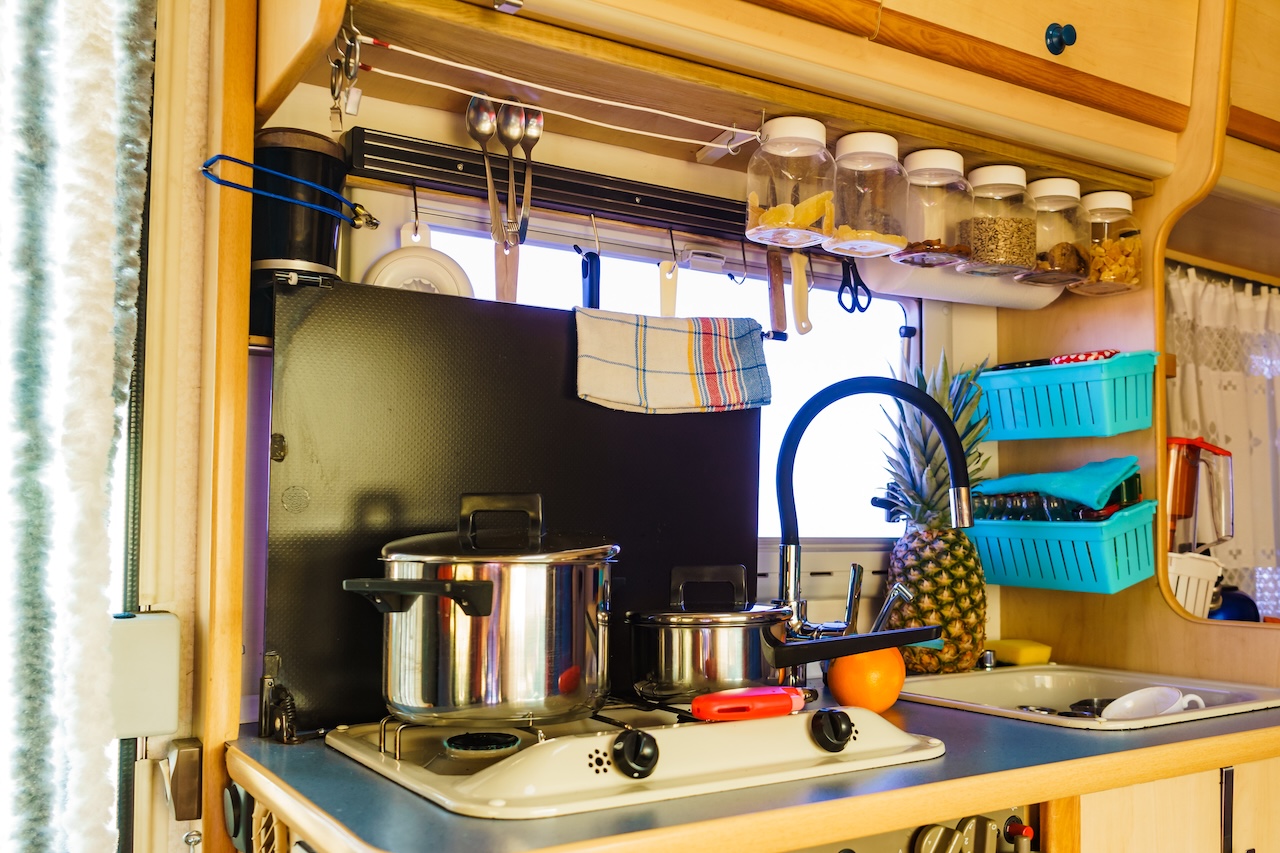
"I assumed a campervan would come with cookware" — only to find nothing was provided. Troubles caused by this kind of assumption are quite common.
Whether cookware, linens (sheets/towels), tableware, and an ETC device are included varies greatly by shop and plan. "I thought it was included" won't help you once you're on the road, so confirming in advance is essential.
Solution: Check the equipment list twice — once when booking, and again at vehicle pickup. It's easy to rush on pickup day, but spending 5 extra minutes to double-check can make a huge difference to your trip's comfort.
Listening to the pickup briefing only half-attentively, then not knowing how to fold out the bed in the middle of the night. Struggling with the toilet or drainage process. Having to figure out how to refill the water tank on the spot for the first time — all of these are common mistakes.
Cab-conversion campers in particular often require several steps to set up the bed, and it can take more than 10 minutes if you're not used to it.
Solution: Film the pickup briefing on your smartphone. Simply asking, "Would it be okay if I record this so I can review it later?" is almost never refused. It's also a good idea to photograph the manual.
Being asked at return, "How did this scratch happen?" and then getting into a "it was already there" vs. "it happened during your rental" dispute — this is an extremely frustrating kind of trouble.
Solution: At pickup, record video of the entire exterior of the vehicle from all angles. Video footage includes a timestamp, making it strong evidence in case of any dispute. If you find any scratches or dents, confirm them together with shop staff before pickup and have them recorded in writing.
"I used the hair dryer and the battery was dead the next morning." "I left the air conditioner running all night and had no power left by morning." This is one of the most common troubles for campervan beginners.
The sub-battery has a limited capacity, and continuous use of high-power appliances (hair dryers, electric kettles, microwaves, air conditioners) can drain it very quickly.
Solution: Make it a firm rule to only use high-power appliances at RV parks or campsite power sites with external electrical hookups. Battery levels can be checked on the in-vehicle monitor, so it's important to develop the habit of checking the remaining charge before going to sleep.
"I drove into a multi-story parking lot and almost hit the ceiling, then couldn't get out." "I got stuck passing another vehicle on a narrow mountain road." These are common mistakes for people driving a campervan for the first time.
Driving with the mindset of a regular passenger car, it's easy to forget just how tall, wide, and long a campervan actually is.
Solution: Before departure, always check and note down the height, width, length, and weight of the vehicle you'll be driving.
Some navigation apps can guide you along routes based on vehicle size, but few account for a campervan's height or weight restrictions in detail. Don't rely on navigation apps alone — check your route in advance using Google Maps or similar tools, and look out for bridges, tunnels, or multi-story parking lots with height restrictions.
It's also a good habit to stop and check before entering an unfamiliar road, to avoid irreversible trouble.
A free-spirited travel style of "deciding where to stay based on the day's mood" is appealing, but doing this on your first campervan trip is very risky.
Night falls and you can't find a suitable spot, or you arrive at a roadside station only to find the parking lot full — these kinds of troubles do happen. Especially during high season like Golden Week, roadside station parking lots can fill up from midnight onwards, and there have been real cases of travelers left with nowhere to go.
Solution: At the very least, always secure your first night's accommodation in advance. For beginners, RV parks with proper facilities and reservation systems are especially recommended. You can decide flexibly for the second night onward depending on how your trip unfolds, but locking in the first night is a firm rule for starting your trip with peace of mind.
"I thought it was a gasoline vehicle but it was diesel." "I thought it was diesel but it was gasoline." In the worst case, this can cause serious engine damage. Repair costs can run into hundreds of thousands of yen.
Campervans come in both gasoline and diesel versions.
Solution: Always verbally confirm the fuel type at pickup, and put a note reading "Diesel" or "Gasoline" somewhere visible. Taking the extra step of double-checking the note before refueling at a self-service station is important.
Being scolded by staff for throwing trash in a roadside station's bins, or getting complaints from a neighboring vehicle for leaving the engine running — this kind of etiquette trouble doesn't just ruin the mood of your trip, it also damages the image of campervan travel culture as a whole.
Solution: Always take your trash with you, and be as considerate as possible about engine noise and door slamming late at night or early in the morning. It helps to imagine how you'd feel if an unfamiliar large vehicle parked in front of your house and its doors kept banging in the middle of the night. Following good manners helps preserve the places where everyone can enjoy campervan travel.
"The road home was jammed and I couldn't make it back in time." "Refueling took longer than expected and I was late." Being late for the return time incurs late fees and also inconveniences the next customer.
Solution: Build enough buffer into your final day's schedule so you can depart 1-2 hours before your return time. It helps to think of the last day of your trip not as "time to enjoy" but as "time for traveling, refueling, and cleaning." Plan your route accounting for possible traffic on the way back, and aim to move early.
Here is a checklist summarizing the 13 failure patterns introduced above. Please review it before departure.
Most campervan rental mistakes are things that could have been avoided if you'd known about them in advance. Having read this article, you now know many of these common failure patterns. All that's left is to review the checklist once before departure, and you can head off on your trip with confidence.
Get prepared, and fully enjoy the freedom that only a campervan trip can offer.
▶ Find campervan rental shops nationwide → Campingcar Map
▶ Check typical pricing in advance → Campervan Rental Price Guide
▶ Check insurance and coverage details → Campervan Rental Insurance and Coverage
▶ Check what to bring on the day → What to Bring on the Day of Your Campervan Rental
 Sep 16, 2026
 Sep 15, 2026
 Aug 10, 2026
 Apr 6, 2026